Book a call

What we give you

The tools for AI transformation.

We set up the capability to build, review and run your own software: SafeZone, GuardRails, FastTrack, and an MCP server into your systems. From there you order code through any code agent you choose, Claude Code, Cursor, Codex, or ours, software as self-service. We and our partners then help you build value on top.

5 business days To go-live
Typically 4 to 8 weeks To first use-case
Your repo The code you pay for is yours, in your own repository

Where the work happens. Two people, one problem, one afternoon.

Press release · 17 August 2026

Emberloom AI is open for business.

Stockholm, 17 August 2026. Emberloom AI has started operating. The company builds tailored AI solutions for e-commerce: new processes, code that fits how a business actually works, and agents that keep it running. Emberloom AB was registered on 13 August 2026 and is the legal entity behind the brand.

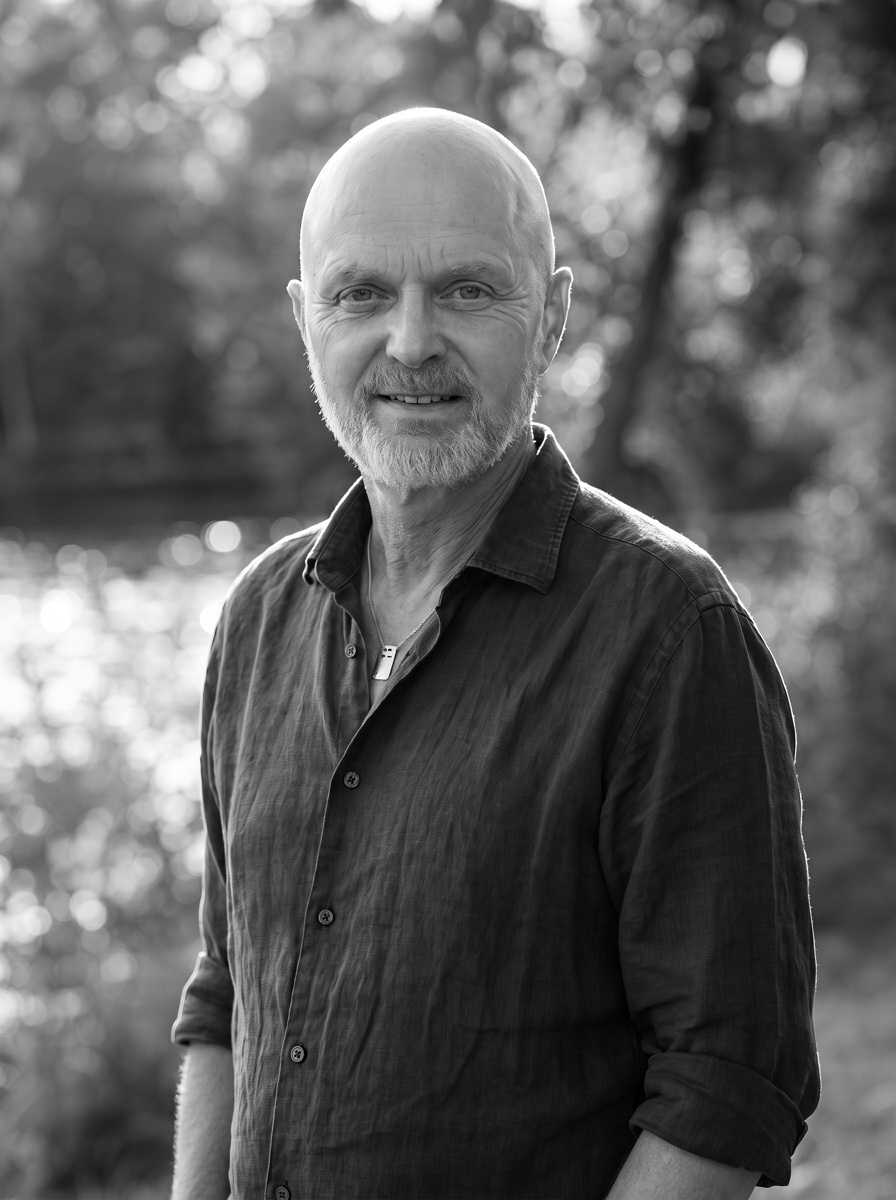
Emma Ekström and Stefan Sånnell founded Emberloom AI. Emma, the CEO, brings project and change management grounded in software and engineering, combined with years in sales and business development, and a stubborn talent for getting things to actually happen. Stefan has worked as a consultant and CEO, inside software companies and in line roles as CTO, CDO and COO, running e-commerce and ERP programmes and watching how much of the real work happens in the gaps between systems. He co-founded Emberloom alongside Emma, is chair of the board, and commissions the code and develops the concept. Adán Hultgren joins as a board member and sounding board, bringing fifteen years of building large systems and robust solutions for e-commerce companies, and early experience of using agents to run large teams and large software projects.

Emma Ekström, co-founder and CEO

Emma Ekström. CEO.

Adán Hultgren, board member

Adán Hultgren. Board.

Stefan Sånnell, co-founder and chair

Stefan Sånnell. Chair.

The three have been colleagues in different constellations for ten years, and have spent the last of them at the front edge of AI in e-commerce, working with progressive customers who wanted to move early. Together with those pioneers they built the capabilities Emberloom now runs on, and learned what separates a solution that lasts from an impressive demo: real data, real process work, and someone who owns it once it is live. They kept arriving at the same conclusion.

The conclusion is that most e-commerce companies do not need another system. They need the operational layer that should have existed between the ones they already pay for. Emberloom AI builds that layer, puts agents inside it rather than beside it, and leaves the code with the customer. The platform is live within a week of signing, on a fixed monthly platform fee, and the first use-case follows as ordered work.

The platform has three capabilities. FastTrack is the processes, skills and instructions for AI-generated code: anyone who can describe a need can create working code, not just developers. GuardRails is quality assurance and security: all code is tested, scanned and approved before it reaches production. SafeZone is the secure, monitored runtime where that code runs, with access to internal systems via MCP servers and APIs, hosted inside the EU.

The company runs with significantly more AI agents than people, by design, and intends to keep it that way. When it takes on more work it deploys more agents, so the team stays small and the people in it stay close to the work. One team means one team: the people who sit with a customer and work out what is actually broken are the same people who build the answer and are still there when it needs changing a year later. That is why a company this size can take on the work it does.

About Emberloom AI. Emberloom AI builds custom AI solutions for e-commerce companies that want to own what they run. The name comes from the loom, the first machine in history driven by a program instead of by a hand, and from the ember that keeps glowing after the project is complete. Together they say what the company does: weave the threads of a business into a pattern that can be run again, and leave something behind that keeps working because the team is there to tend it. The company trades as Emberloom AI. Emberloom AB is the legal entity that signs. One counterpart, one contract, one team accountable for the result.


Press contact

hello@emberloom.ai

How it fits together

The capability, then self-service.

01

The capability

We set up SafeZone, GuardRails, FastTrack, and an MCP server into your systems. That is the part that has to be right before anyone writes a line of code, and we set it up for you.

02

Software as self-service

You order code through Claude Code, Cursor, Codex, or our own agent. Every order runs through the same pipeline and the same review. The time from idea to shipped feature is limited by how well you write instructions and evals, not by us.

03

Value together

We and our partners can build with you. Your own team can build alone. A partner can build instead. Every route runs through the same GuardRails.

The cost of doing nothing grows every quarter.

What it costs today

You are paying full price for a fraction of the value.

  • Count your licences. Across the implementations we've run, most companies use somewhere near a tenth of what they pay for, and the tenth they actually need is the part the vendor never built. See it in the cases.
  • Then count the integrations. Each one was expensive to build, is expensive to keep alive, and moves a handful of fields between two systems that were never meant to meet.
  • Every new market adds another system, another login, another manual sync. It compounds, and it never compounds in your favour.
  • The usual answers are a twelve-month enterprise programme or living with it. Neither one is a plan.

When building costs a fraction of what it did, the maths changes. A system you use a tenth of becomes a candidate for replacement, not a fact of life. We weave data, processes and systems into a pattern you can run again every day, without anyone having to remember how it went the first time.

How we work together

We set up the capability once. You build the value in steps.

01

Identify the processes

We find where your people are the integration engine between systems. That is where the four cost layers pile up: time, errors, waiting, and person-dependency.

First
02

Dashboard

One place where the numbers agree. It reads from your source systems, so everyone looks at the same reality instead of a report that was true on Tuesday.

Then
03

Command centre

Here is the anomaly, here is the cause, here is the suggested action, here is who approves it, and here is the log of what was done.

Upgrade
04

Agents at work

Agents take the routine cases within the rules you set, and escalate the rest. They climb the autonomy ladder over time: human in the loop, then on the loop, then out of the loop.

Hand over

Emberloom sets up the capability. Emberloom, your team and our partners create the value on top of it.

Room to think. What is left when the routine work leaves.

From individual to team

Everyone got faster. The company did not.

The first wave of AI landed with individuals. People write quicker, summarise quicker, draft quicker. The gain is real, but it stops at the edge of one person's desk. Nothing about the way the team works has changed, so nothing shows up where you measure.

The step that matters is turning that speed into shared work. A command centre is where individual speed turns into team throughput, because the process, the data and the decisions all sit in one place instead of in twelve inboxes.

And the second effect is the one people underestimate. When the routine work goes somewhere else, what is left is the work that needs a human: the judgement, the negotiation, the idea nobody asked for. Efficiency and creativity are not a trade-off here. Getting one is how you afford the other.

The platform

Three parts. One coherent way of building with AI.

01

FastTrack

The method, the playbooks, the map of e-commerce, queried through a knowledge agent.

02

GuardRails

A quality framework that reviews every line of AI-generated code before it ships.

03

SafeZone

Operations inside the EU. Your data stays in Europe, your models stay yours.

What it costs

A fixed platform fee. Development by the hour.

The platform fee is fixed per level, and it covers running the platform and its capacity, not development hours. Every build is ordered in writing with an estimate up front, then billed by the hour, or agreed at a fixed price against acceptance criteria for that case. You can build it yourself or with a partner, and the platform fee stays the same either way.

Entry

Prove the value

One measurable use-case, ordered and estimated up front, running in production on top of the platform.

Platform fee: fixed, monthly

Integrations included: 5 read, 1 write. More added per integration and direction, no cap.

Environments: one production

Personal data: read only, not stored

Availability: best-effort, support response within 2 business days

Go-live: earliest 5 business days after signing. Platform establishment complete in about 4 weeks.

Standard

Replace the SaaS you pay for

CRM, PIM, BI, built to fit how you work, not to the market average.

Platform fee: fixed, monthly

Integrations included: 9 read, 9 write. More added per integration and direction, no cap.

Environments: staging and production

Personal data: stored in a dedicated PostgreSQL database in the EU. Write-back possible. Storing or writing personal data is what moves you from Entry to this level.

Availability: 99.5% monthly uptime, with service credits

Go-live: earliest 5 business days after signing. Platform establishment complete in about 4 weeks.

Enterprise

Replace the work

Agents, workflows, and a roadmap built with your operations team.

Platform fee: priced per case

Integrations included: as needed. More added per integration and direction, no cap.

Environments: as needed

Personal data: dedicated instance

Availability: custom

Go-live: custom

Development and support are billed by the hour at one rate, strategic advisory at another, both quoted before you sign. AI tokens at cost, on your own account or ours. Three months initial commitment, then one month's notice. Prices on request. The full model in the FAQ.

How it starts

Proof first, commitment later.

01

Introduction

We listen, you sketch the problem on the table, we say honestly whether we are a fit.

30 min
02

Walkthrough

We sit with your operations team and map the systems, the people, and where the leverage hides.

1–2 weeks
03

Entry pilot

One measurable use-case, ordered and estimated up front, on top of the platform fee. You decide what success looks like before we start.

Typically 4 to 8 weeks
04

What comes next

Standard or Enterprise, only if the pilot earned it. You keep the code either way.

Ongoing

The weave. Someone still has to set the pattern.

The name

Loom is the weaving frame. Ember is the glow.

In 1804 Joseph Marie Jacquard fitted punched cards to his loom in Lyon. For the first time a machine was driven by a program instead of by a hand. The cards went on to Hollerith, to IBM, to the computer.

A company is threads that have to hold together: data, processes, systems, people. None of them means anything on its own. What we deliver is not one more thread, it is the weave.

Ember is the glow that stays and keeps working after the project is complete and deployed. It needs no tending. The team stays, the work continues, and the benefit compounds.

Friends of Emberloom

Build with the same toolbox.

Friends of Emberloom is for freelancers who want to use the concept in their own client work and help develop it. And on Emberloom Share we pass on what we read and learn.

Your team deserves better tools.

If you are running on five systems or more and spending hours on work that software should handle, get in touch.

Thirty minutes. No prep needed. We will tell you honestly whether we can help.